

The dog in las Meninas
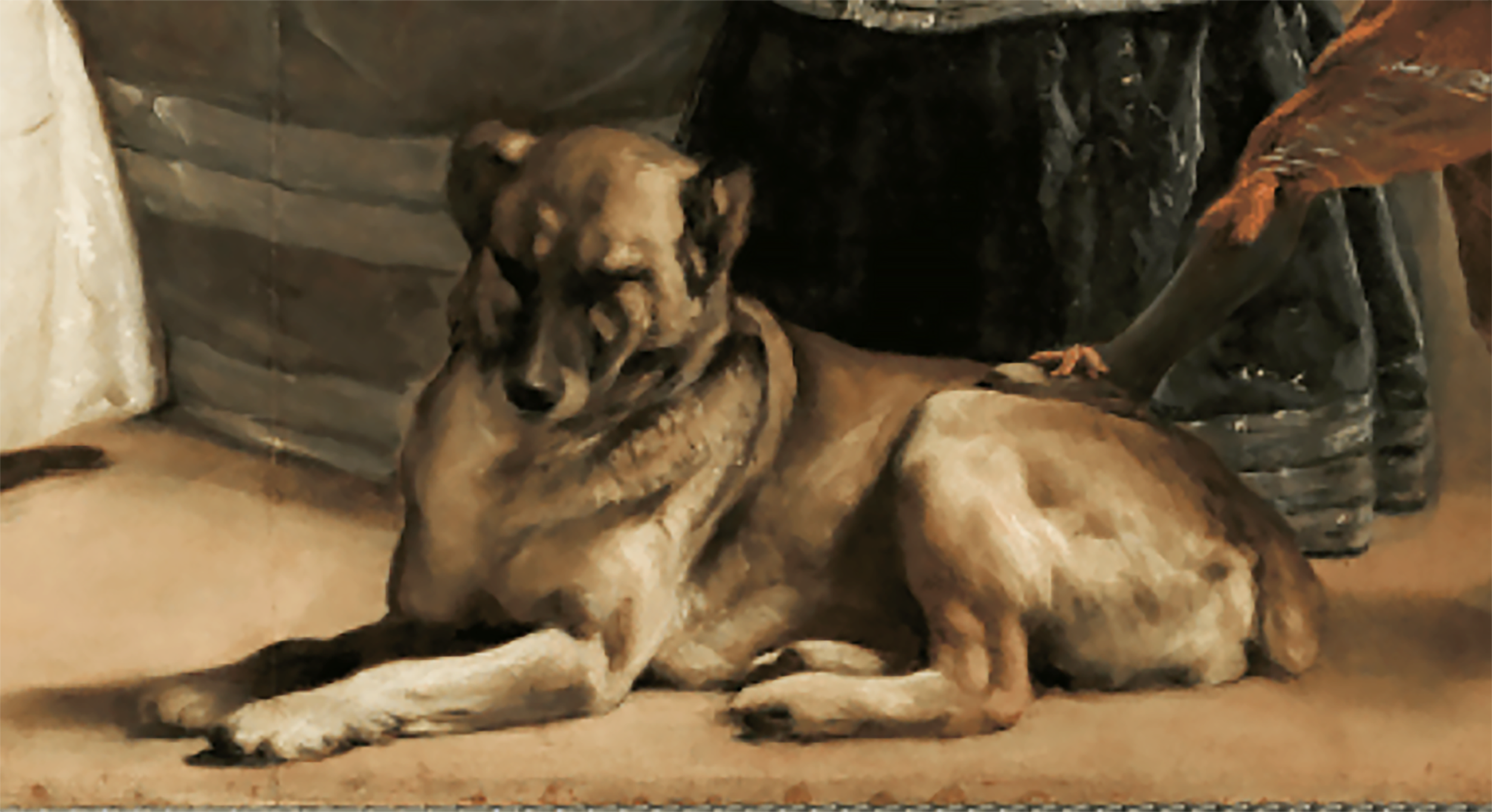
The Dog in Las Meninas
Spanish Mastiff, Majesty, and the Calmness of a Dog.
In the vast intellectual world of Diego Velázquez’s Las Meninas, how could one ignore this extraordinary presence? Critics have spent centuries debating mirrors, sovereignty, perspective, illusion, royal presence, painterly consciousness, and the metaphysics of representation itself. Entire essays have been written around the Infanta Margarita, the reflected monarchs, and the astonishing ambiguity of the spectator’s position.
And yet, lying there with immense calm, there is the dog.
It is the only figure in the painting with its eyes closed. Everyone else looks, watches, poses, or awaits recognition. The dog alone remains untouched by this elaborate choreography of attention.
And this is precisely why the animal matters so much within the composition. He is not a decorative detail, nor an anecdotal presence. He is, quite simply, a “mastín Español”.
This is not speculation. The cropped tail, traditionally shortened to avoid vulnerable points during confrontations with wolves, the monumental bone structure, the massive paws, the heavy neck, the broad skull, and the serene but imposing physiognomy leave little room for doubt. Velázquez painted this breed, the ancient guardian breed of the Iberian peninsula, a dog shaped over centuries to protect flocks against wolves, isolation, winter, and silence.
And perhaps this certainty matters more than one initially imagines.
The animal introduces into Las Meninas something profoundly terrestrial. Around him, the painting vibrates with court tension, social ritual, hierarchy, reflection, and unstable perception. But the dog remains untouched by all anxiety. He neither performs nor contemplates himself.
He simply is.
Velázquez’s restrained palette becomes especially sumptuous in the execution of the mastiff. Burnt Umber, Naples Yellow, and Yellow Ochre predominate. The figure is described with extraordinary economy of brushwork, allowing atmosphere and psychological gravity to emerge naturally rather than through excessive detail.
Does the beast have a name? “Salomón” and “León” have both been suggested on several occasions throughout history, though “Salomón” feels especially appropriate: the wise king of the Old Testament who, in this instance, no longer needs to see. Judgement has already been rendered.
One senses neither servility nor agitation, but dignity. A calm sovereignty. The old reversal of dog and God suddenly feels strangely appropriate before such composure.
The dog does not seek attention, which is precisely why he commands it.
Velázquez understood something some modern painters forget: true majesty rarely announces itself loudly. That stillness stabilises the entire painting. Amid so much movement and human self-consciousness, he alone seems untouched by uncertainty.
He may well be the only presence in the painting untouched by self-consciousness.
Juan de Barrientos