

15 Black Paintings
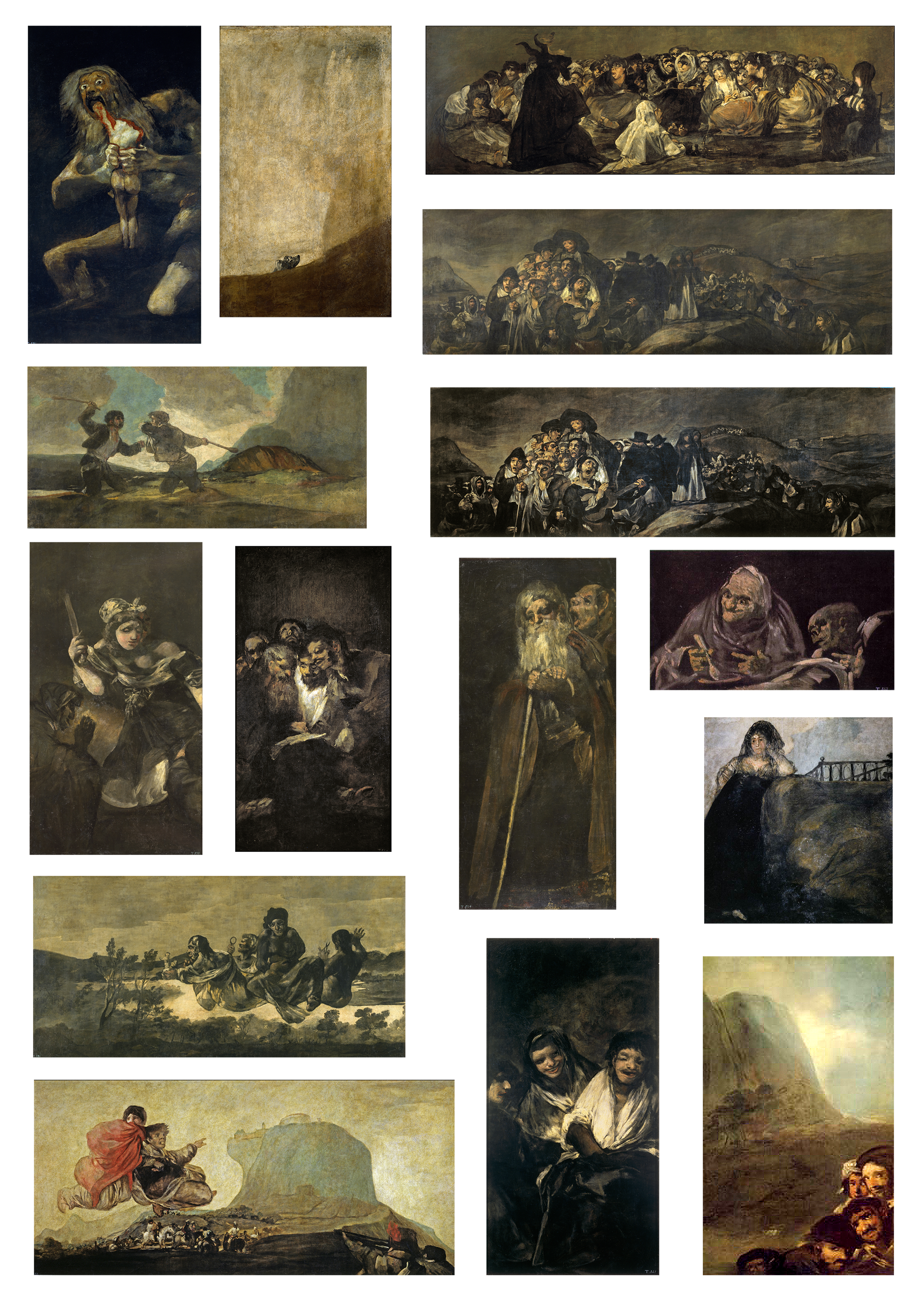
The Black Paintings are a series of fifteen mural paintings that Francisco de Goya created between 1820 and 1823 on the walls of his home, the Quinta del Sordo, near Madrid. Fourteen are today preserved in the Museo Nacional del Prado, while a fifteenth painting, Heads in a Landscape, survives outside the museum in a private collection
1. Saturn Devouring His Son — Saturno devorando a su hijo
2. The Witches' Sabbath (The Great He-Goat) — El aquelarre (El gran cabrón)
3. The Pilgrimage to San Isidro — La romería de San Isidro
4. Fight with Cudgels — Duelo a garrotazos
5. The Dog (or The Half-Submerged Dog) — El perro (Perro semihundido)
6. Atropos (The Fates) — Átropos (Las Parcas)
7. Judith and Holofernes — Judith y Holofernes
8. Two Old Men Eating Soup — Dos viejos comiendo sopa
9. Two Old Men — Dos viejos (Un viejo y un fraile)
10. La Leocadia — La Leocadia (Una manola)
11. Fantastic Vision (Asmodea) — Visión fantástica (Asmodea)
12. Procession of the Holy Office — Procesión del Santo Oficio (Peregrinación a la fuente de San Isidro)
13. Men Reading — Hombres leyendo
14 Women Laughing (also known as Two Women and a Man) — Mujeres riendo (Dos mujeres y un hombre)
15 Heads in a Landscape — Cabezas en un paisaje
The Fifteen Black Paintings of Goya
Between 1820 and 1823, during the final years of his life, Francisco de Goya transformed the walls of his country house, La Quinta del Sordo ("House of the Deaf Man"), into one of the most extraordinary artistic cycles in Western art. Painted directly onto the plaster, these haunting murals were never intended for public exhibition. They were deeply personal works, created in isolation, free from royal commissions or academic expectations. Today, fourteen of these paintings are preserved in the Museo del Prado, while a fifteenth, Heads in a Landscape, survives separately and is often regarded by scholars as part of the original decorative programme.
This essay introduces the complete cycle of Goya's Black Paintings. Over the coming days, each of the fifteen murals will receive its own dedicated essay, examining its history, symbolism, artistic technique, and the many questions it continues to raise more than two centuries after its creation. Rather than treating these works merely as isolated masterpieces, the series will explore them as interconnected chapters of one of the most profound and enigmatic visual narratives in the history of art.
Juan de Barrientos