

Bosch and Dreams
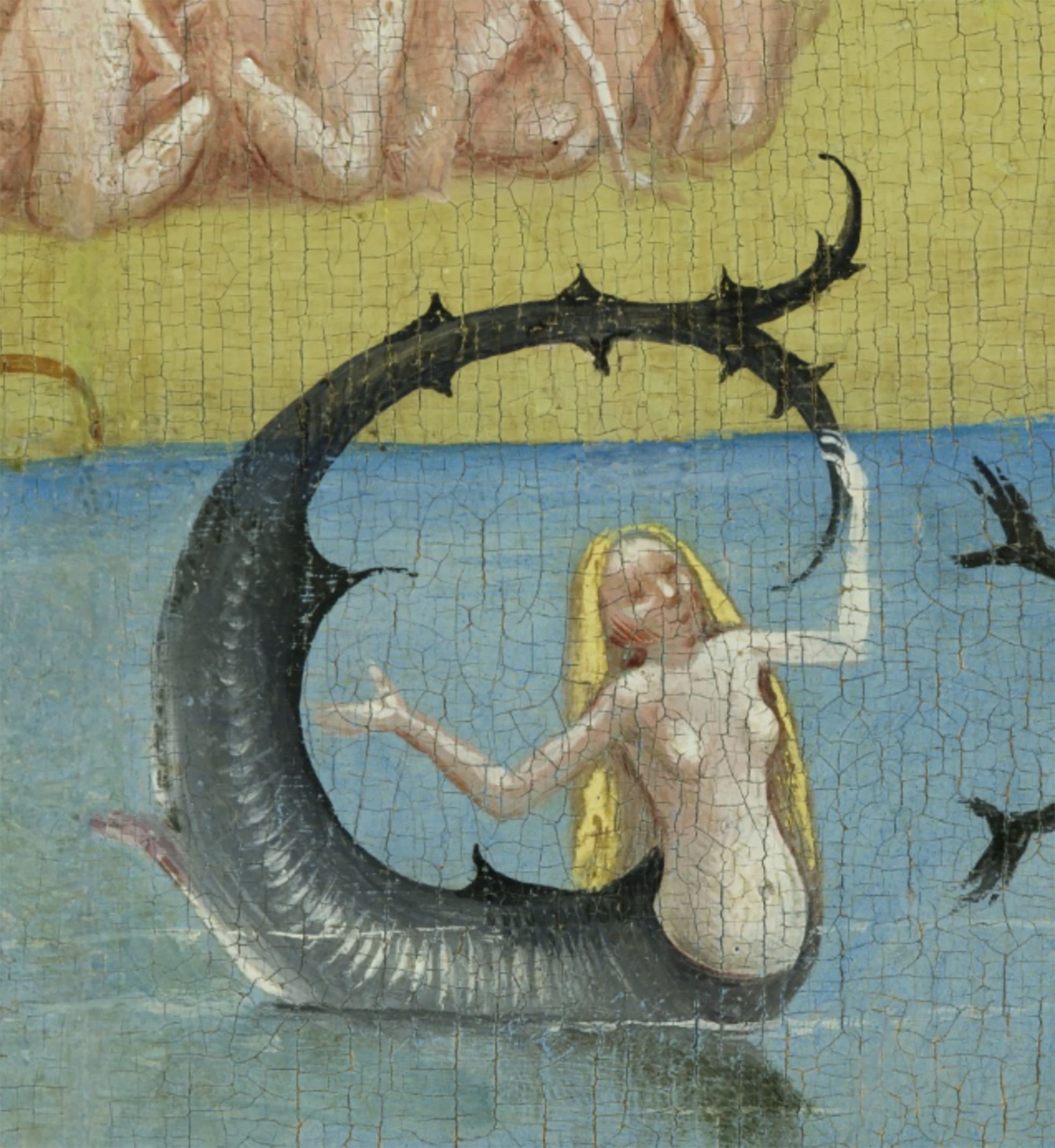
Bosch and Dreams
Surrealism, Visions, and the Dangerous Architecture of the Mind
Few painters in Western art provoke the language of dreams as instinctively as Hieronymus Bosch. One stands before The Garden of Earthly Delights or The Temptation of Saint Anthony and immediately encounters the sensation of unstable logic: hybrid creatures, impossible architecture, disproportionate bodies, animals behaving like metaphysical jokes, and landscapes that appear assembled according to emotional rather than physical law. Bosch’s paintings often feel less painted than remembered — fragments recovered from some feverish interior theatre.
It is therefore unsurprising that modern viewers, especially after the twentieth century, instinctively associated Bosch with dreams. The connection became particularly powerful after the rise of Surrealism, when artists and writers searching for access to the unconscious suddenly discovered, waiting patiently in the fifteenth century, a painter who appeared to have arrived several centuries too early.
Salvador Dalí admired Bosch enormously. One can easily understand why. Dalí’s own landscapes of psychological instability — elongated shadows, irrational juxtapositions, hallucinatory precision — often operate through a similar mechanism. Both painters understood that the truly disturbing image is not chaos, but organised irrationality. A nightmare is frightening precisely because part of it still obeys recognisable structure.
Yet the temptation to describe Bosch simply as “the first surrealist” ultimately obscures more than it reveals.
The Surrealists, especially figures such as Max Ernst and Dalí, were profoundly influenced by the emergence of psychoanalysis. Sigmund Freud had proposed that dreams functioned as disguised expressions of unconscious desire, repression, fear, and symbolic conflict. Dreams became psychological documents. Beneath their distortions lay hidden drives seeking expression.
Bosch’s universe behaves differently.
Although his imagery often resembles dream logic, the underlying architecture of his paintings remains fundamentally moral and theological. His monsters do not emerge from Freudian repression in the modern sense. They emerge from a late medieval world saturated with religious symbolism, apocalyptic anxiety, temptation, sin, punishment, alchemy, folklore, and spiritual danger.
Bosch was not painting the unconscious mind as Freud understood it.
He was painting the instability of the soul.
That distinction matters enormously.
Modern Surrealism often celebrates liberation from rational control. Bosch rarely does. His paintings may contain seduction, eroticism, absurdity, and visual intoxication, but beneath the spectacle lies a persistent moral gravity. Pleasure in Bosch frequently carries consequences. Delight becomes excess; excess hardens into punishment. His imagery may appear delirious, yet the delirium remains organised around spiritual tension.
One could almost say that Bosch paints temptation with the visual energy later artists reserved for desire itself.
This difference becomes particularly visible when comparing Bosch with Dalí. Dalí’s dream imagery often possesses narcissistic theatricality. His visions seem aware of their own brilliance. Bosch, by contrast, retains an unsettling impersonality. His worlds do not feel invented for self-expression. They feel discovered, as though the painter had somehow gained temporary access to a cosmic ecosystem operating according to obscure metaphysical laws.
Even today, many viewers experience the peculiar sensation that Bosch’s creatures are not symbolic inventions but biological possibilities waiting somewhere beyond ordinary perception.
That reaction is psychologically fascinating.
Part of Bosch’s enduring power lies in the extraordinary precision of his technique. Dreams are usually vague. Bosch’s nightmares are rendered with jeweller-like clarity. Fur, metal, translucent surfaces, vegetation, flesh, scales, musical instruments, architecture, and monstrous anatomy are painted with microscopic conviction. The impossible becomes persuasive because every texture behaves convincingly.
This is precisely why the paintings feel dreamlike rather than merely fantastical.
In genuine dreams, absurdity rarely announces itself as absurd. The dreamer accepts impossible conditions with temporary conviction. Bosch achieves something remarkably similar. His visual universe possesses internal coherence. The viewer gradually accepts gigantic birds swallowing sinners, fish walking on land, or hybrid creatures carrying symbolic burdens because the world itself remains stable within its own irrational premises.
In this sense, Bosch anticipates something later explored not only by Surrealism, but also by modern cinema. Directors such as David Lynch often create psychological unease through stable surfaces concealing invisible distortion. Nothing fully collapses into chaos. Instead, ordinary reality begins to behave according to hidden emotional pressures.
Bosch understood this mechanism centuries earlier.
One must also remember the historical environment in which Bosch lived. Fifteenth-century Europe was not psychologically “simple” merely because it preceded modern psychology. Medieval consciousness contained intense symbolic density. Heaven, Hell, miracles, demons, relics, visions, divine punishment, saints, omens, and apocalyptic expectation were woven deeply into daily existence. The invisible world was not metaphorical. It was considered structurally real.
Dreams therefore occupied a profoundly ambiguous territory.
Some were believed to originate from divine revelation. Others emerged from temptation, illness, demonic interference, melancholy, or spiritual corruption. Medieval dream theory inherited ideas from classical antiquity, Christian theology, monastic literature, and popular superstition simultaneously. Bosch painted within this atmosphere of unstable permeability between visible and invisible realms.
His visions were not “fantasy” in the modern entertainment sense.
They belonged to a world in which reality itself remained spiritually porous.
This perhaps explains why Bosch continues to disturb modern viewers more deeply than many later surrealists. Modern Surrealism often carries irony, intellectual playfulness, or aesthetic self-awareness. Bosch feels more dangerous. His paintings rarely reassure the spectator that everything belongs safely within art.
The creatures seem capable of escaping interpretation.
Carl Jung might have approached Bosch differently from Freud. Jung believed certain symbolic forms emerged repeatedly across cultures because they originated from deeper collective structures within human consciousness. Bosch’s imagery frequently produces this strange archetypal sensation: birds becoming psychological forces, eggs functioning as unstable containers of transformation, tunnels behaving like birth passages, hybrid bodies suggesting fractured identity.
Yet even Jungian interpretation must be handled carefully. Bosch was not illustrating archetypal psychology consciously. His imagination remained rooted in Christian cosmology, moral allegory, and late medieval symbolism. Modern viewers may discover psychological universality within the paintings, but the painter himself inhabited a profoundly theological framework.
The danger lies in reducing Bosch entirely to modern psychology.
Doing so risks flattening his historical reality.
At the same time, refusing psychological interpretation altogether would be equally inadequate. Bosch clearly understood fear, temptation, absurdity, erotic instability, greed, humiliation, and collective madness with extraordinary perceptiveness. His paintings repeatedly expose human beings behaving irrationally while believing themselves perfectly normal — a phenomenon hardly confined to the fifteenth century.
Perhaps this is why Bosch feels perpetually contemporary without ever becoming fully modern.
He occupies a strange territory between medieval cosmology and psychological universality. His paintings emerge from a world governed by salvation and damnation, yet they continue to resonate within secular societies fascinated by the unconscious mind. Different centuries project different anxieties into the same images.
The Surrealists recognised something genuine in Bosch, even if they partially misunderstood him.
He demonstrated that irrational imagery could possess structure.
He understood that terror often emerges not from chaos, but from coherence operating according to unfamiliar laws.
And perhaps most importantly, Bosch understood something modern psychology would later rediscover repeatedly: human beings are not entirely governed by reason. Beneath civilisation lies an unstable territory populated by desire, fear, symbolism, fantasy, appetite, shame, and transformation.
Bosch did not paint dreams exactly.
He painted a universe in which dreams, theology, morality, terror, and imagination had not yet separated into different categories.
Juan de Barrientos