

The Brotherhood of our Lady
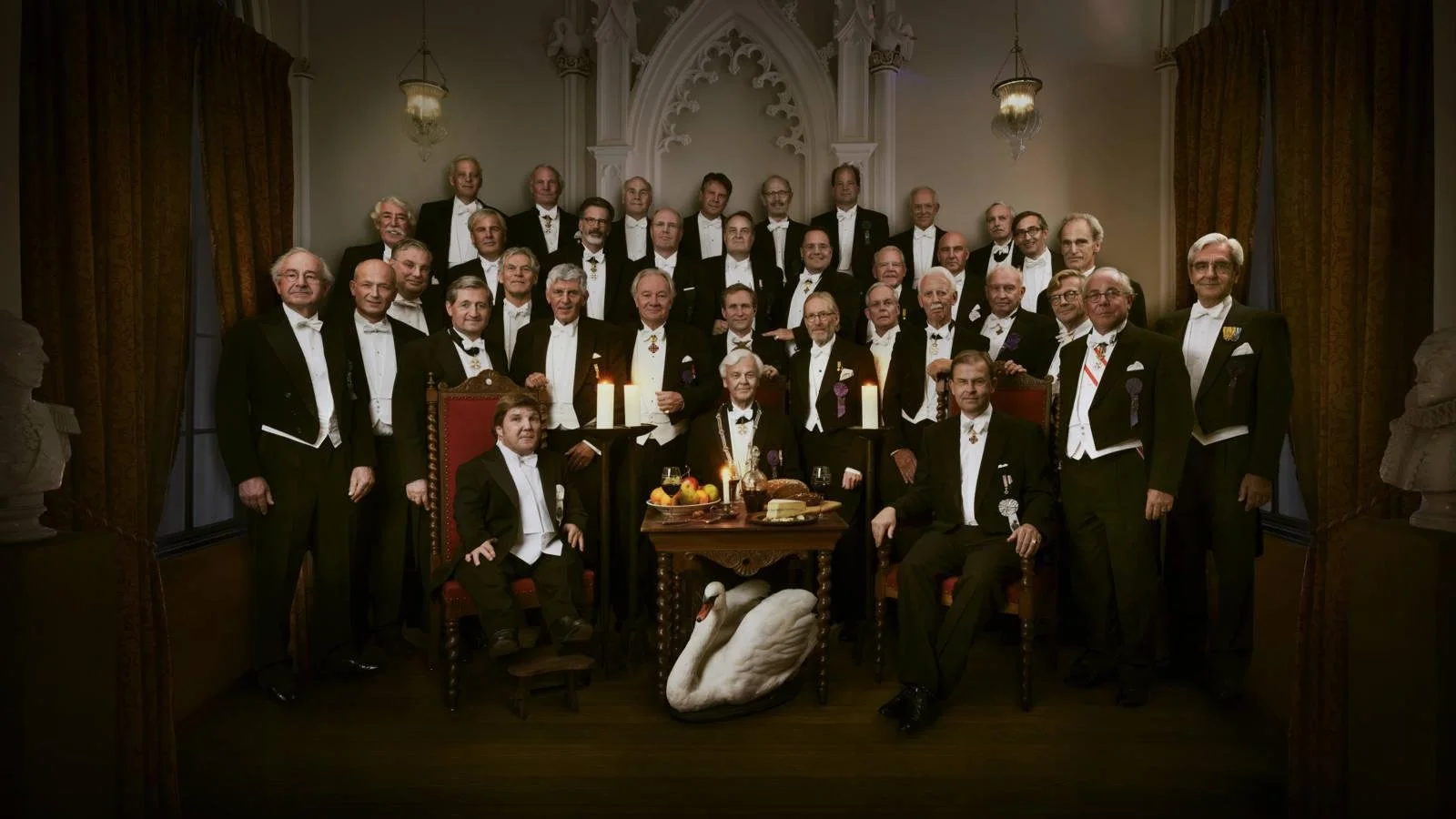
Bosch and the Brotherhood of Our Lady
To understand Hieronymus Bosch properly, one must leave the dreamscapes of his paintings for a moment and walk instead through the damp streets of late medieval ’s-Hertogenbosch. Bells echo across canals. Merchants negotiate beneath timbered facades. Pilgrims move toward Saint John’s Church. Swans are prepared for ceremonial banquets. Priests, magistrates, musicians, noblemen, and craftsmen gather beneath candlelight inside one of the most prestigious religious confraternities in Northern Europe: the Illustrious Brotherhood of Our Blessed Lady.
Bosch was not an isolated eccentric painting hallucinations in solitude. He belonged to a sophisticated urban, religious, and social environment. The Brotherhood of Our Lady stood at the center of that world.
Founded in 1318 in ’s-Hertogenbosch, the Illustrious Brotherhood of Our Blessed Lady — the Illustre Lieve Vrouwe Broederschap — was dedicated to the veneration of the Virgin Mary. At first glance, it resembles many medieval confraternities devoted to charity, liturgy, and religious devotion. Yet this particular brotherhood gradually evolved into something far more influential. It became a powerful social network binding together clergy, aristocrats, wealthy merchants, magistrates, musicians, architects, and artists.
Membership mattered.
In 1486 or 1487, Bosch became a member of the Brotherhood, and shortly afterward he achieved the more prestigious status of sworn brother, or “Zwanenbroeder” — Swan Brother. This distinction was not casually granted. Sworn members occupied the upper ranks of the confraternity and participated in privileged ceremonies, meals, and administrative responsibilities. The organization functioned simultaneously as religious institution, elite club, ceremonial society, and intellectual network.
The symbolism of the swan itself is fascinating. Sworn members traditionally donated a swan for annual banquets, giving rise to the term “Swan Brothers.” The image possesses a peculiar elegance. One imagines long banquet tables illuminated by oil lamps while roasted swans are carried ceremonially into Gothic halls. Medieval spirituality was rarely abstract. Religion moved through ritual, fabric, silverware, incense, architecture, and food.
This material atmosphere matters enormously when approaching Bosch.
Modern audiences often imagine medieval religious life as emotionally monochrome, severe, and permanently ascetic. In reality, late medieval devotional culture could be extraordinarily theatrical. Processions, liturgical music, carved altarpieces, embroidered vestments, painted chapels, relics, feasts, and sacred drama formed part of ordinary urban life. Bosch’s imagination emerged from this sensory density.
The Brotherhood maintained its own chapel within Saint John’s Church, the immense Gothic structure dominating the city skyline. Construction on the church continued throughout Bosch’s lifetime, transforming the city itself into a landscape of scaffolding, stone dust, timber cranes, stained glass, and sculpted saints. Bosch almost certainly knew the cathedral intimately. He attended ceremonies there, participated in Brotherhood functions, and likely discussed commissions within its walls.
The environment surrounding the Brotherhood was intellectually richer than many modern stereotypes of the Middle Ages allow. Its members included architects such as Jan Heyns, musicians and composers such as Matthaeus Pipelare and Jheronimus Clibano, prominent local magistrates, and later even figures connected to the Dutch nobility. The Brotherhood attracted individuals involved in administration, music, theology, diplomacy, and artistic production.
Bosch therefore occupied not the margins of society, but its cultivated center.
This complicates simplistic interpretations of Bosch as merely a deranged visionary.His paintings are strange, certainly, but they emerged from a highly structured religious world deeply concerned with morality, salvation, temptation, and spiritual discipline.
At the same time, Bosch’s membership raises difficult questions.
How could a respected member of an elite Marian confraternity produce paintings filled with monstrous hybrids, infernal machinery, naked humanity, digestive horror, and grotesque punishments? Some scholars have interpreted Bosch as fundamentally orthodox, a moralist warning against sin through visual terror. Others detect something more elusive: irony, ambiguity, perhaps even subtle criticism directed toward the corruption and theatricality of religious society itself.
The truth may lie somewhere between these positions.
The Brotherhood represented sincere devotion, but also prestige and hierarchy. Its rituals fused piety with social display. Wealthy citizens performed humility publicly while simultaneously reinforcing status. Bosch must have understood these contradictions intimately. One suspects he observed human behavior with extraordinary attentiveness.
Indeed, several recurring themes in Bosch’s paintings acquire new depth when viewed through the lens of confraternal culture. Public ritual, moral theater, collective behavior, ceremonial excess, and spiritual anxiety all permeated late medieval urban life. Bosch did not invent these tensions. He transformed them into symbolic form.
The city surrounding the Brotherhood also shaped Bosch profoundly. ’s-Hertogenbosch was among the most prosperous urban centers in the Low Countries. Trade routes connected it to wider European commerce. Foreign merchants, diplomats, pilgrims, and craftsmen passed continually through the city. Music flourished there. So did religious pageantry.
Yet prosperity existed beside instability. Fires devastated districts. Epidemics appeared regularly. Public executions remained part of civic life. The medieval imagination lived constantly beside catastrophe.
Bosch’s paintings preserve that atmosphere with disturbing precision.
The Brotherhood itself still exists today.
This fact surprises many people. More than seven centuries after its foundation, the Illustrious Brotherhood of Our Blessed Lady continues in ’s-Hertogenbosch, now functioning primarily as a cultural and historical institution promoting dialogue, heritage, and tradition. The organization survived the Reformation, political upheaval, war, and secularization. Its historic headquarters, the Zwanenbroedershuis, still stands in the city.
The Brotherhood retains ceremonial traditions, archival collections, religious associations, and symbolic insignia linked to its medieval origins. Its visual identity frequently incorporates Marian imagery, Gothic heraldic elements, and the swan motif associated with the sworn brothers.
Saint John’s Cathedral also survives magnificently. The church remains one of the great Gothic monuments of the Netherlands, its stone exterior crowded with sculptural details that occasionally feel strangely Boschian themselves: demons, beasts, distorted faces, and fantastical carvings suspended high above the streets.
Standing there today, one begins to understand Bosch differently.
His paintings did not emerge from nowhere.
They emerged from bells, incense, carved wood, banquet rituals, theological processions, illuminated manuscripts, public anxiety, sacred music, trade wealth, and a city perpetually balancing devotion against spectacle.
The Brotherhood of Our Lady formed part of that balance.
And somewhere within its candlelit ceremonies sat Hieronymus Bosch himself: observant, disciplined, socially respected, and perhaps quietly amused by humanity’s endless talent for transforming salvation into theater.
Juan de Barrientos