

Jheronimus and his sense of humour
Did Bosch Have a Sense of Humour?
People smile before the Garden. They point at details, call others to look, laugh unexpectedly, or fall silent. Five centuries after its creation, the painting still produces these reactions.
Did Bosch have a sense of humour?
Is the question difficult to answer? We know remarkably little about the personality of Jheronimus Bosch. Unlike Leonardo no letters or notebooks survive in which he discusses comedy. No contemporary account tells us whether he was cheerful, serious, sociable, or reserved. As with so many aspects of his life, we begin with a simple admission: we do not know.
Yet we possess something more valuable than speculation. We possess the paintings themselves.
When viewers encounter Bosch's imagery, they often experience a mixture of emotions. The paintings can be disturbing, beautiful, mysterious, and amusing at the same time. Bosch created a world that resists a single emotional response. When we smile at a detail in the Garden, are we responding to something Bosch intended?
Paintings communicate through images. Bosch understood the psychology of the spectator. He understood curiosity, surprise, and the pleasure of discovery. His paintings often function through visual discoveries. We notice a detail. Then another. Observation becomes exploration. Exploration becomes participation. Bosch understood how to hold attention in a very personal way.
The traditional tendency has been to approach Bosch primarily as a moralist. Sin, temptation, judgement, and consequence certainly appear throughout his work. Yet moral seriousness and humour are not opposites. Medieval culture was filled with visual satire, carnival traditions, comic imagery, playful marginalia, and absurd reversals. The same society that built cathedrals also produced rabbits fighting knights, musicians riding snails, and countless visual jokes. Bosch lived within that world. The question is not whether humour existed in his culture. It did. The question is whether Bosch used it.
Humour is not necessarily comedy. Bosch rarely invites simple laughter. Instead, he places familiar things in unfamiliar situations and presents impossible situations with complete seriousness.
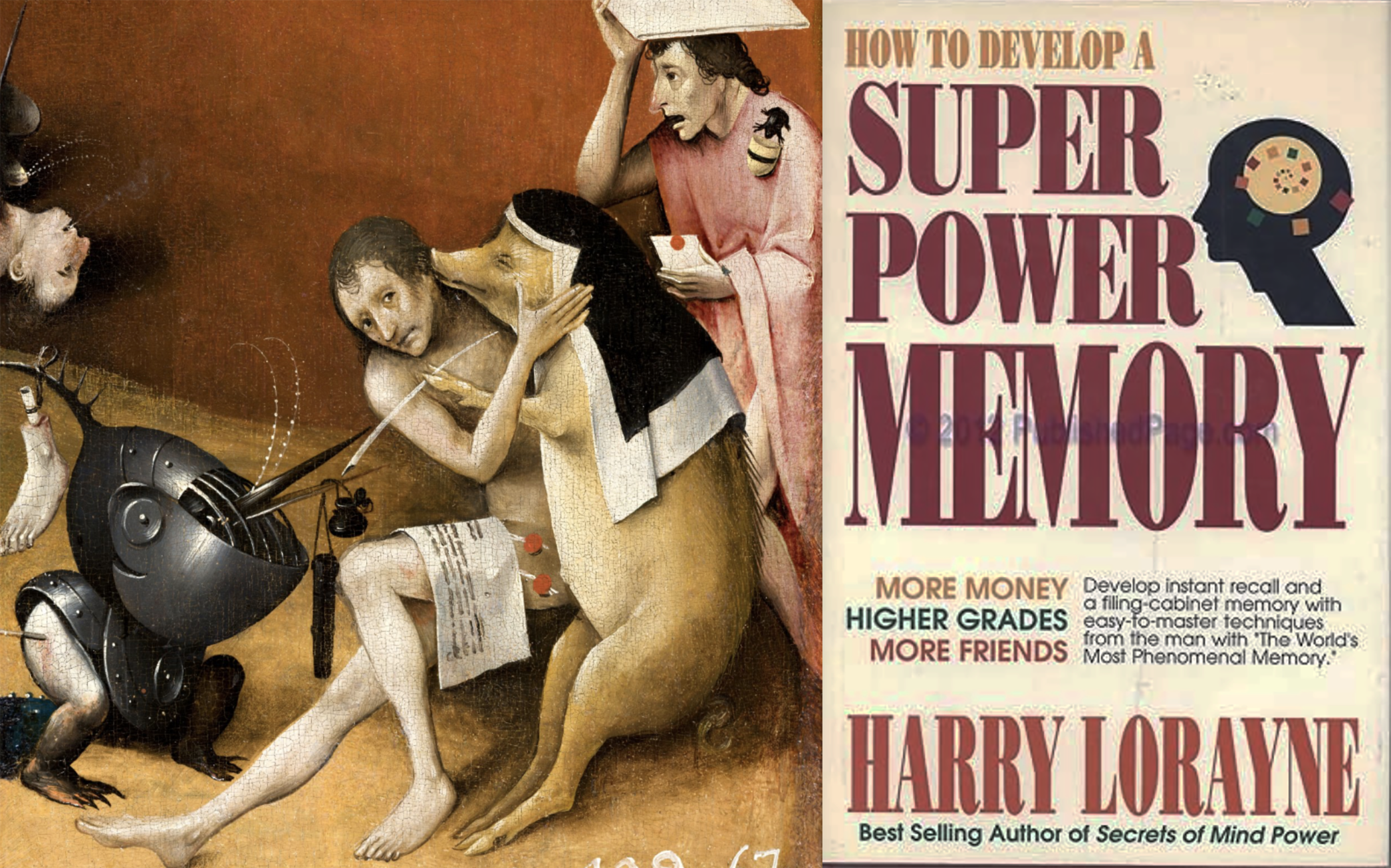
The Pig-Nun in the Hell panel provides a good example. A pig dressed as a nun leans toward a condemned soul while presenting a document to be signed. The scene may contain criticism, satire, or moral commentary. It also contains absurdity. We encounter an impossible situation presented as though it were perfectly normal.
The Bird-Man operates in a similar way. The figure is horrifying. Many first-time visitors also find it strangely amusing. A giant bird-headed creature sits upon a chamber pot-like throne while consuming human beings. The image occupies two emotional worlds at once. It is dreadful and ridiculous at the same time.
The same principle appears throughout the Garden. Human beings interact with animals in impossible ways. Objects exchange roles with living creatures. Scale behaves unpredictably. Logic bends without completely breaking.
People remember what surprises them. They remember what unsettles them. They remember what they cannot easily classify.
This observation may help explain why Bosch continues to attract audiences far beyond traditional art historical circles. Many visitors arrive at the Prado knowing little about fifteenth-century theology or late medieval devotional life. They leave fascinated.
Bosch's paintings communicate directly. They speak first. Interpretation comes later.
At this point, an unexpected comparison becomes useful.
Charles Addams built an artistic career on the collision between darkness and amusement. Bosch often employs a similar mechanism. The impossible is treated as ordinary. The bizarre appears completely natural within its own universe. We are left suspended between laughter and unease.
The comparison becomes even more interesting when we think about memory..
When I was fourteen, I read Harry Lorayne's How to Develop a Super Power Memory, a book that happened to be in my father's personal library. One of Lorayne's central ideas was simple: unusual images are easier to remember than ordinary ones. The stranger the combination, the more firmly it lodges itself in the mind.
Bosch instinctively employed many of the same visual mechanisms that modern memory experts deliberately use. The bizarre combinations, impossible juxtapositions, and visual surprises that characterize the Garden of Earthly Delights may serve theological and moral purposes, but they also possess another remarkable quality: they are extraordinarily difficult to forget.
Lorayne encouraged students to create impossible mental images. The stranger the image, the more effectively it remains in the mind. A man riding a fish is easier to remember than a man walking down a road. A giant bird seated upon a throne remains longer in the imagination than an ordinary ruler seated in a chair. Bosch appears to have understood this principle intuitively. Whether his purpose was humour, warning, moral instruction, or some combination of all three, he created images that resist forgetting.
As I often say, caution is of utmost importance. Bosch was not creating cartoons. The Garden is not a collection of jokes. The painting remains a profound work concerned with humanity, desire, morality, and consequence.
Yet profound works are not required to be humourless. We cannot know whether Bosch was a humorous man. We cannot know what made him laugh. We cannot know how he behaved among friends. But we can observe the paintings.
The paintings suggest an imagination that understood surprise, curiosity, and the psychology of the spectator.
Juan de Barrientos