

Saint Jerome
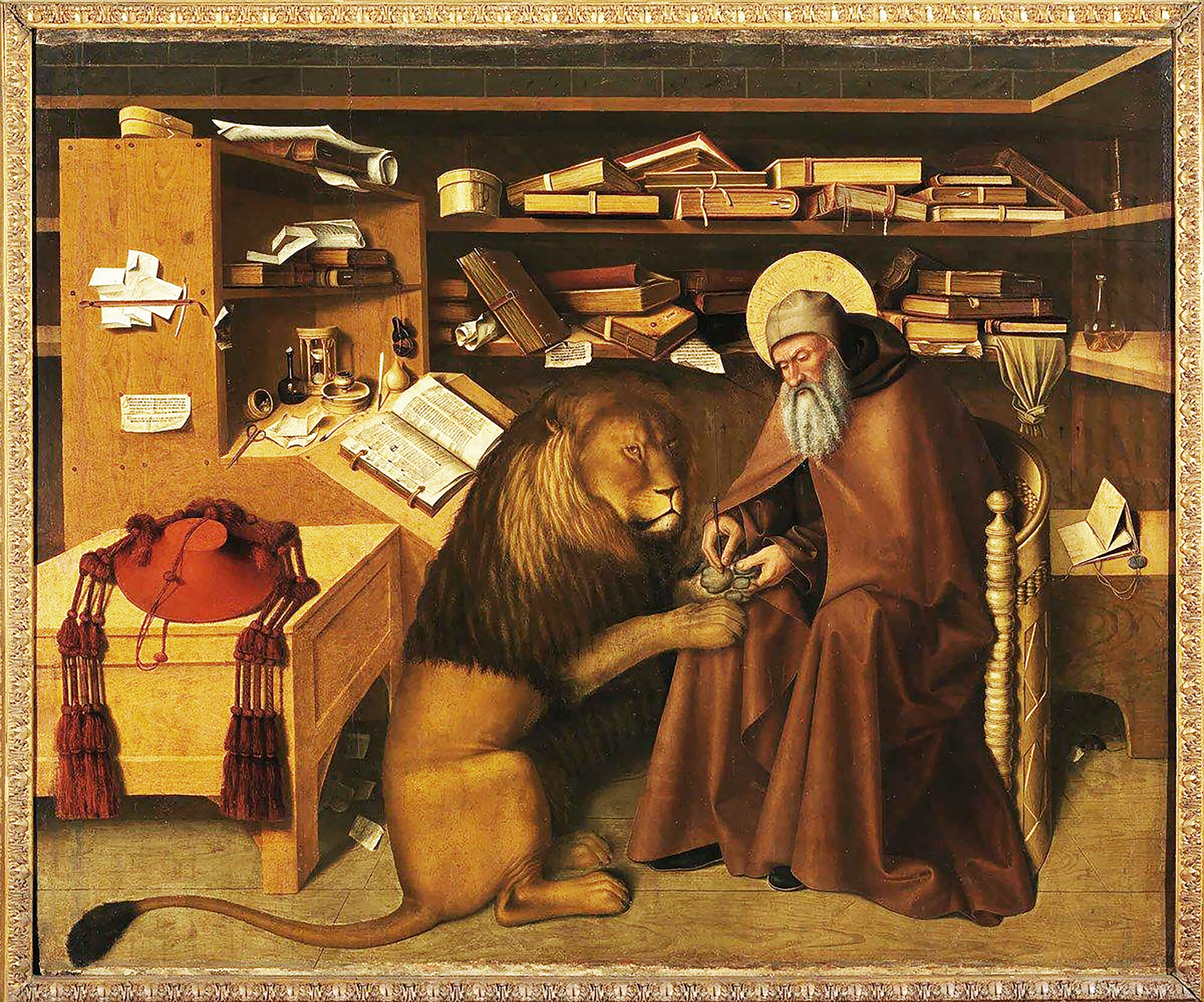
Saint Jerome and the Biblical World of Bosch
Why should a student of Bosch care about Saint Jerome? At first glance, the connection seems remote. One was a scholar of the fourth century; the other, a painter working in the Low Countries more than a thousand years later. Yet anyone seeking to understand the intellectual world in which Hieronymus Bosch lived soon encounters the towering figure of Saint Jerome.
Many discussions of Bosch begin with the painting itself. We examine figures, landscapes, animals, architecture, and countless details scattered across the panels of The Garden of Earthly Delights. Such observations are necessary, but they raise an important question. What ideas, texts, and traditions shaped the world in which Bosch lived? No artist works in isolation. Every painter inherits stories, symbols, beliefs, and habits of thought from the culture around him. For Bosch, one of the most important foundations of that culture was the Bible, and for the Europe of his day the Bible was inseparable from the work of Saint Jerome.
Born around the year 347, Saint Jerome became one of the most influential scholars in Christian history. His greatest achievement was the Latin translation and revision of Scripture that later became known as the Vulgate. Commissioned by Pope Damasus I and completed through years of labor, study, and comparison of manuscripts, the Vulgate gradually became the standard biblical text of Western Christendom.
It is difficult to overstate its influence. For more than a thousand years, priests preached from it, monks copied it, theologians debated its meaning, students memorized its passages, and artists encountered biblical narratives through its language. Long before printed Bibles became common, the Vulgate shaped how Europe understood Scripture. When Bosch entered a church in ’s-Hertogenbosch, he heard readings from the Vulgate. When sermons explained Genesis, Heaven, Hell, sin, redemption, or the Last Judgment, they did so through words transmitted by Saint Jerome. In this sense, Bosch inhabited a world profoundly shaped by the saint's work.
There is another intriguing connection. Saint Jerome's Latin name was Hieronymus. More than a thousand years after the saint's death, the painter from ’s-Hertogenbosch adopted a version of that same name and signed many of his works Jheronimus Bosch. Whether this reflected devotion, admiration, education, or simple convention cannot be demonstrated with certainty. Nevertheless, the fact remains that Bosch repeatedly placed a form of Saint Jerome's name upon his paintings. Every signature preserves a small but fascinating link between the artist and one of Christianity's greatest scholars.
Saint Jerome also became one of the most recognizable figures in Christian art. Renaissance painters frequently depicted him surrounded by books, manuscripts, writing desks, and instruments of study. Often a lion appears beside him, recalling the medieval legend in which the saint removed a thorn from the animal's paw. Whether historical or legendary, the image became inseparable from Saint Jerome's iconography. Students of Bosch may notice that lions and other powerful animals also occupy important places within the visual culture of the late Middle Ages, although direct connections should not be assumed without evidence.
For those interested in Bosch, one passage from the Vulgate deserves special attention. In Luke 11:52, Saint Jerome translated Christ's warning to the experts in the law using the phrase clavem scientiae, the "key of knowledge." The expression would have been familiar to educated readers throughout Europe. Deep within the Hell panel of The Garden of Earthly Delights appears an enigmatic key that has generated considerable discussion among observers of Bosch's work. It would be irresponsible to claim a direct connection between the biblical passage and Bosch's image, yet the association is worth contemplating. In Christian thought, keys carried meanings that extended far beyond their practical function. They could symbolize authority, admission, exclusion, access, understanding, or responsibility. The appearance of a key within Bosch's visual language inevitably invites reflection upon those wider traditions.
Perhaps the most valuable connection between Saint Jerome and Bosch lies not in a specific object or symbol, but in a method. Saint Jerome devoted years to comparing texts, correcting errors, and returning to original sources. He understood that careful observation must precede confident conclusions. The same principle serves Bosch studies remarkably well. The temptation to rush toward interpretation is always present, particularly when confronting one of the most complex paintings in Western art. Yet meaningful understanding begins with attention. Before asking what a detail means, we must first establish what we are actually looking at.
For this reason, Saint Jerome deserves a place within any serious exploration of Bosch. His translation of Scripture helped shape the intellectual atmosphere in which the painter lived. His name echoes in Bosch's own signature. His words may illuminate certain symbols that continue to provoke discussion. Most importantly, his scholarly discipline offers a useful reminder that patience, humility, and close observation remain indispensable tools for anyone attempting to understand The Garden of Earthly Delights.
Juan de Barrientos