

The Black Paintings
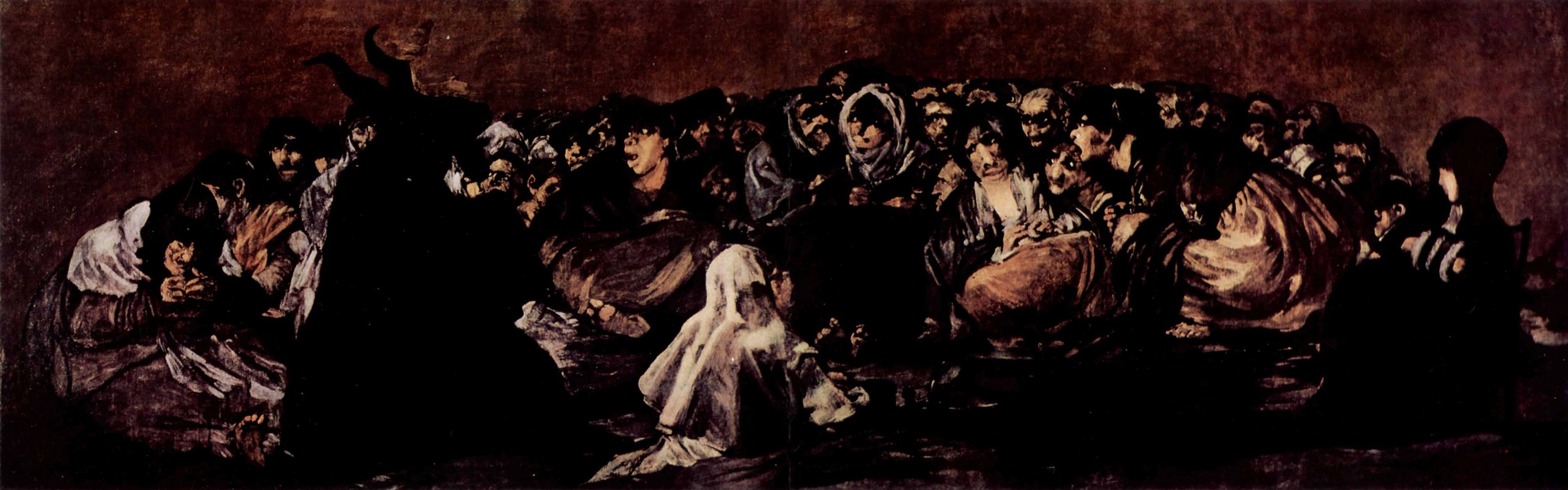
All fourteen surviving Black Paintings by Francisco de Goya are today housed in the Museo del Prado in Madrid. Yet their survival is far more complex and tragic than a simple museum narrative. What we see today are not pristine masterpieces preserved exactly as the artist left them, but damaged survivors of a lost environment — fragments rescued from a collapsing house, altered during restoration, and separated forever from the psychological space for which they were created.
The Black Paintings were never conceived as conventional works destined for public admiration. Goya painted them directly onto the plaster walls of his country house, the Quinta del Sordo, between approximately 1819 and 1823. By then he was an old man in his seventies, profoundly deaf, politically disillusioned, and psychologically transformed by illness, war, and isolation. These murals were not court commissions. They were private visions.
One of the most haunting details in the story is that the house already carried the name Quinta del Sordo — “House of the Deaf Man” — before Goya purchased it. The previous owner, Pedro Marcelino Blanco, was himself deaf. The coincidence feels almost symbolic: an aging, deaf painter, increasingly withdrawn from society, acquires a house already marked by silence.
The Quinta stood on the outskirts of Madrid near the Manzanares River, in what was then a semi-rural area of Carabanchel Bajo, not far from the Puente de Segovia. Today the surrounding urban landscape has completely changed, but the approximate site lies within the modern district of Latina. The house no longer exists. It was demolished in 1909 after decades of deterioration and structural damage.
Contrary to the romantic image of Goya living entirely alone inside a haunted retreat, the painter was not completely isolated. He lived at various times with Leocadia Zorrilla and her daughter Rosario, and the estate also included servants, gardeners, and workers who maintained the property. The Quinta itself was more than a simple cottage. It included orchards, agricultural land, auxiliary buildings, and service quarters.
Even so, Goya’s psychological isolation was real. His deafness transformed his personality profoundly. Friends and contemporaries increasingly described him as introspective, skeptical, emotionally distant, and darkly perceptive. Although he still received occasional visitors — intellectuals, physicians, artists, and liberal acquaintances — the Quinta gradually became both refuge and psychological chamber.
Unlike traditional paintings designed for churches, palaces, or collectors, the Black Paintings formed part of the architecture itself. They covered the walls of rooms inside the house, surrounding the viewer with witches, pilgrims, grotesque faces, violence, silence, and existential dread. A visitor did not merely look at them. A visitor entered them.
This is one of the greatest losses in the history of art. The true masterpiece may not have been the individual paintings alone, but the immersive totality of the Quinta del Sordo itself. Once the murals were detached from the walls and placed inside a museum, the original psychological experience vanished forever. The oppressive intimacy, the dialogue between rooms, and the feeling of walking through the interior landscape of Goya’s mind disappeared.
Fortunately, a number of historical photographs were taken before the transfer process began. The French photographer Jean Laurent documented the interior walls during the 1870s, preserving invaluable visual evidence of the paintings in their original architectural setting. These photographs reveal decorative wallpaper, painted borders, and compositional areas later lost during restoration. They are among the most important documents for understanding the original appearance of the Quinta.
During the 1870s, decades after Goya’s death, the paintings were removed from the walls using restoration techniques that were already dangerous even for their time. The murals were transferred onto canvas under the direction of Salvador Martínez Cubells. In the process, sections cracked, paint flaked away, edges were trimmed, and areas had to be reconstructed. What survives today is therefore both authentic and altered.
Historical photographs of the Quinta reveal that several paintings originally contained more visual information than we now see. Duel with Cudgels, for example, once showed more ground beneath the fighters. Other works lost peripheral space, tonal subtleties, and compositional balance. Some art historians suspect that additional painted sections or transitional imagery inside the house may also have disappeared entirely, though no definitive evidence survives.
Even the surviving paintings bear the scars of physical trauma. This creates a disturbing and strangely poetic paradox. The Black Paintings depict decay, fragmentation, fear, mortality, and the collapse of human certainty. Then the paintings themselves suffered fragmentation, damage, displacement, and partial destruction. The works became victims of the very forces they portray.
Perhaps this is why the Black Paintings feel so modern. They are not polished monuments of artistic perfection. They are wounded objects haunted by time, uncertainty, and survival. They confront us not only with the darkness of Goya’s imagination, but also with the fragility of art itself.
And perhaps the most haunting thought of all is this: Goya may never have intended these works to survive. Painted privately onto the walls of an isolated house, they may have been closer to confessions, visions, or hallucinations than public artworks. Yet from these hidden walls emerged some of the most influential images in modern art — works that still seem to stare directly into the deepest anxieties of the human condition.
Juan de Barrientos