

The man behind the Curtain
Bosch and the Man Behind the Curtain
Bosch may be one of the clearest examples in art history of a creator whose work became vastly larger than the surviving record of his life.
This contrast becomes increasingly striking the more one studies his paintings. The Garden is among the most discussed works in Western art. Entire libraries have been written about its symbolism, its animals, its architecture, its religious meaning, and its relationship to the intellectual world of the late Middle Ages. Yet when we turn from the painting to the man himself, we encounter something unexpected. The vast imaginative universe remains. The historical figure becomes elusive.
Bosch presents a different situation. The surviving documents reveal only fragments. We know that he belonged to a family of painters, that he lived in 's-Hertogenbosch, that he married a wealthy woman, achieved professional success, and became a respected member of the Illustrious Brotherhood of Our Blessed Lady.
We know that he received important commissions and that his reputation extended beyond his city. Beyond these facts, however, the historical record becomes remarkably thin. This absence creates one of the most intriguing paradoxes surrounding Bosch. Countless figures emerged from his imagination, yet the man himself remains difficult to grasp.
What made him laugh? Which books occupied a privileged place within his home? What thoughts accompanied him during long hours in the workshop?
How did he view himself: a craftsman, a storyteller, a religious thinker, or simply a painter earning a living? Nor do we know which of his paintings he valued most highly. Yet if one work invites such speculation, it is surely The Garden. Few works gather so many of the themes that appear throughout his career, and few display such ambition. Whether Bosch regarded it as his greatest achievement can never be known, but it is difficult to imagine that he failed to recognise the exceptional nature of the work. The paintings remain vividly present while the man himself seems to stand just beyond reach.
This situation often tempts us to fill the empty spaces with speculation. Throughout the centuries, Bosch has been transformed into many different figures. He has been described as a heretic, a visionary, an occultist, an alchemist, a secret reformer, a precursor of psychology, the first surrealist, and even a drug user. Some of these interpretations contain intriguing observations. Others reveal more about the concerns of later generations than about Bosch himself.
The temptation is understandable. We dislike uncertainty. When faced with an extraordinary work, we naturally seek an equally remarkable biography. We expect the creator of such images to possess an equally dramatic life. Yet history does not always satisfy those expectations. Sometimes the surviving documents refuse to cooperate with our desire for a complete narrative.
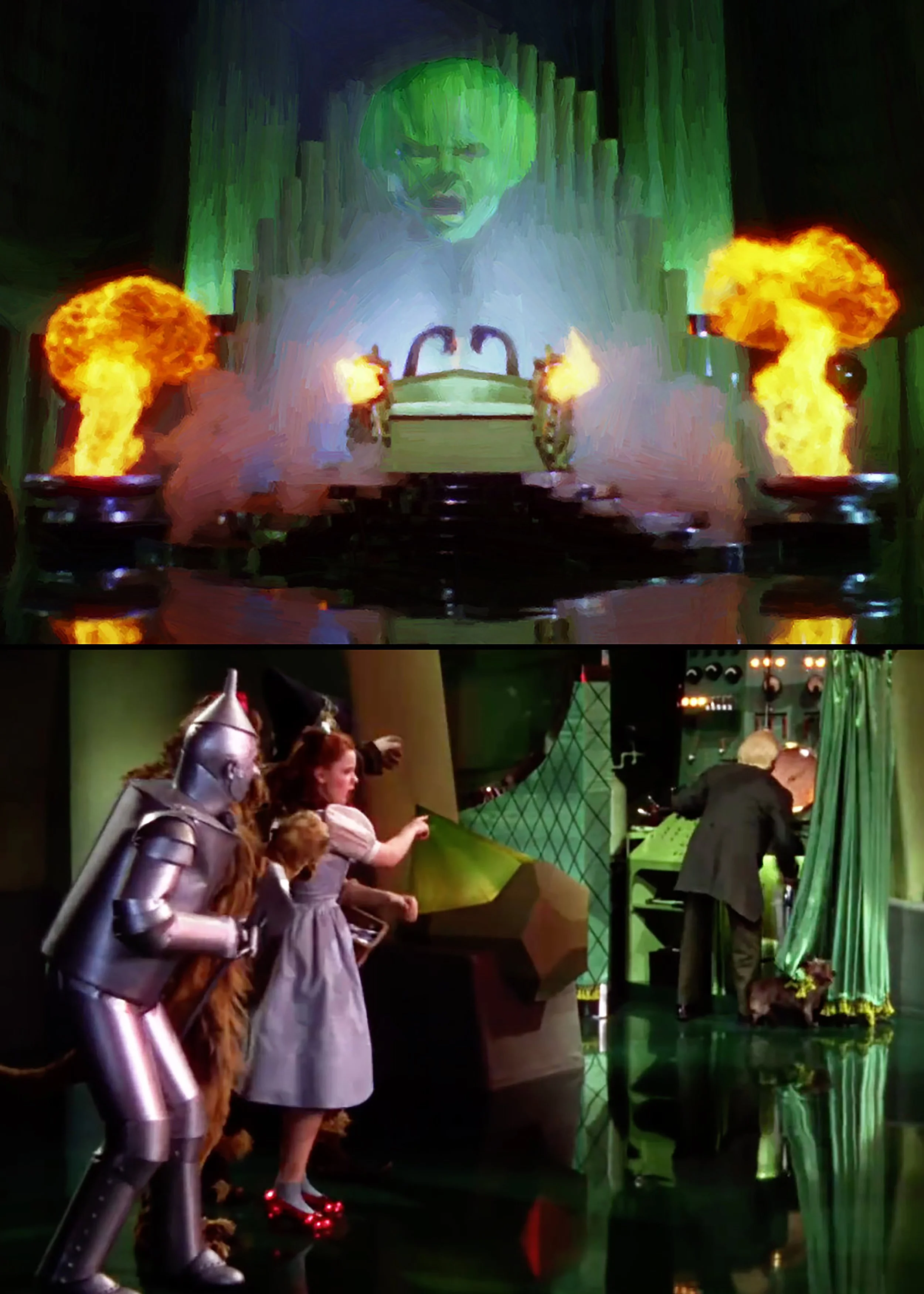
Perhaps this is where a useful analogy emerges. In The Wonderful Wizard of Oz, an imposing spectacle eventually gives way to the discovery of a surprisingly ordinary man behind the curtain. The comparison is not intended as a historical claim about Bosch. Rather, it illustrates a broader question. How can an apparently ordinary life produce such an imaginative universe?
Bosch appears in the surviving records as a respected citizen, professionally successful, socially integrated, and closely connected to one of the most important religious institutions in his city. Nothing in the evidence points toward the sensational figure often imagined by popular culture.
Perhaps this contrast teaches an important lesson. We often assume that genius must announce itself dramatically and that remarkable creations must emerge from equally remarkable biographies. When we think of Leonardo da Vinci, we think of notebooks, observations, sketches, correspondence, and countless anecdotes preserved by history. In Bosch's case, far less survives. Yet that silence may be one reason for his enduring fascination. The historical record leaves gaps that can never be fully closed, while the paintings continue to speak with extraordinary force.
If we could step quietly into Bosch's workshop, I suspect the scene might disappoint those hoping for a revelation. There would be no key to every symbol, no final explanation for The Garden, no dramatic secret waiting to be discovered. We would probably find a working painter surrounded by the ordinary concerns of his trade: pigments, brushes, unfinished panels, and decisions that still needed to be made before the day ended. The man would appear familiar. The paintings remain the greater mystery.
Juan de Barrientos