

Was Goya a Free Mason?
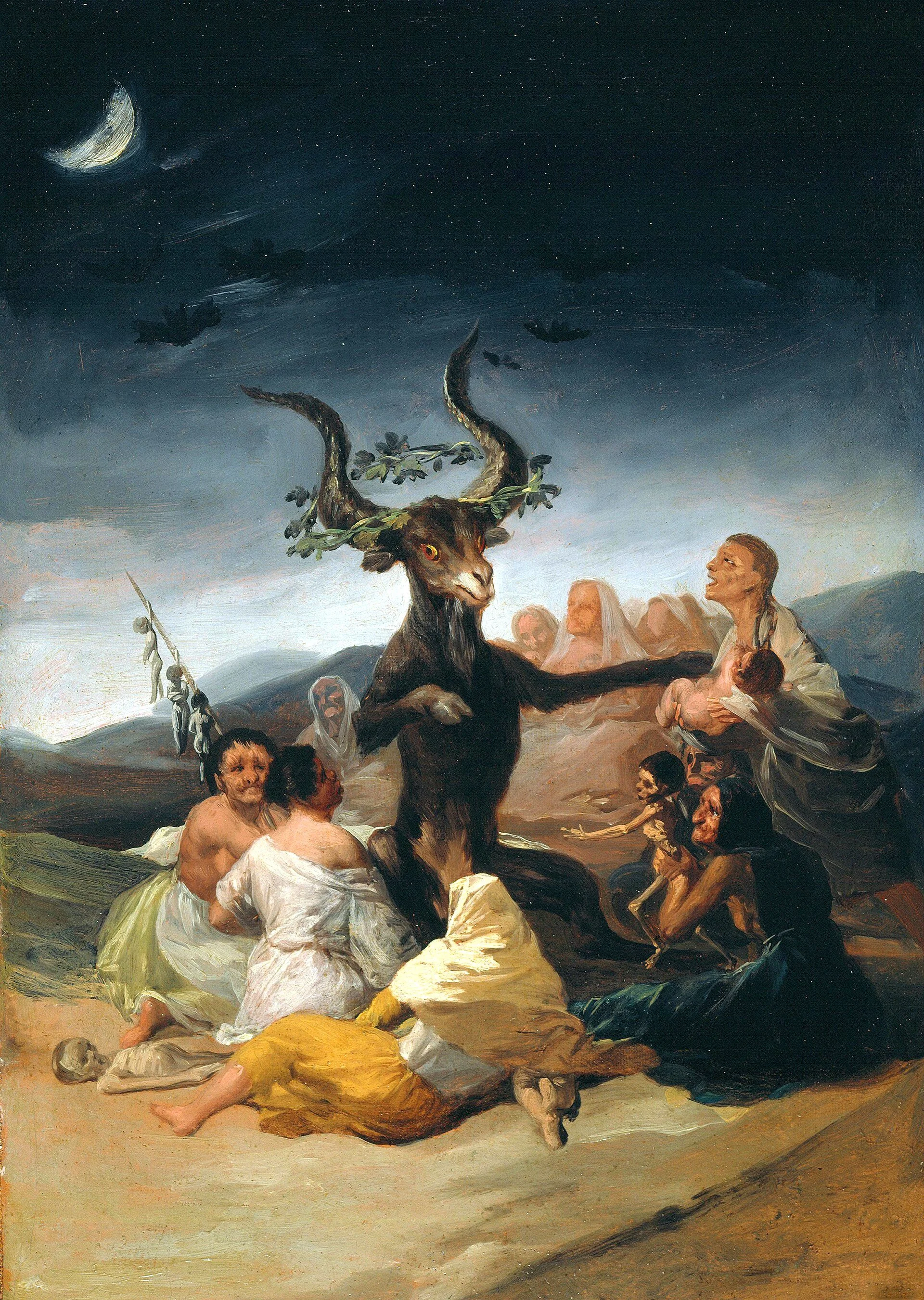
Was Francisco Goya a Freemason? It is one of the most frequently debated questions surrounding his life, yet it cannot be answered without first understanding the Spain in which he lived. During the late eighteenth century, religion, politics, and intellectual life were inseparably connected, making any association with a secret society both controversial and potentially dangerous.Spain remained a deeply Catholic nation where the monarchy and the Church exercised enormous influence. Although the ideals of the Enlightenment—reason, education, and scientific progress—were spreading across Europe, they were received with caution. Reformers sought to modernize the country, but innovation was often viewed with suspicion.
The Spanish Inquisition, though far less powerful than in previous centuries, continued to monitor ideas considered contrary to religious orthodoxy. Freemasonry, already established elsewhere in Europe, was officially condemned and widely regarded as a secretive organization capable of undermining both Church and Crown. Whether these fears were justified mattered less than the fact that the accusation alone could seriously damage a person's reputation.
Goya worked at the centre of this complex world. As court painter, he moved among nobles, politicians, churchmen, and enlightened intellectuals, witnessing both the aspirations and contradictions of his age. His friendships and artistic interests would later fuel speculation about his personal beliefs.Before asking whether Goya was a Freemason—or even what kind of believer he may have been—we must first examine the historical landscape with care. Only then can the evidence be separated from the myths that have grown around one of Spain's greatest artists.
The theory that Goya belonged to Freemasonry has persisted for more than a century, largely because of the company he kept and the ideas reflected in his work. Throughout his career, he developed close friendships with many of Spain's leading Enlightenment figures, including statesmen, writers, and reformers who advocated education, reason, and political modernization. Some of these men were themselves suspected of Masonic sympathies, leading later historians to wonder whether Goya shared their affiliations.
His art has also encouraged speculation. In series such as Los Caprichos, Goya attacked ignorance, superstition, and corruption with remarkable boldness. Rather than rejecting religion itself, he appeared to criticize its abuses and the misuse of power. To many scholars, this emphasis on reason and moral reform echoes values commonly associated with Enlightenment thought and, by extension, with Freemasonry.
Certain paintings have likewise been interpreted as containing Masonic symbolism. Gestures, compositions, and the occasional use of geometric forms have prompted attempts to identify hidden meanings. Yet such interpretations remain highly subjective. Symbols are rarely exclusive to a single tradition, and what one researcher considers Masonic another may see as simply artistic convention.The most important point is that none of these arguments constitutes proof. Friendships, shared ideals, or symbolic interpretations cannot demonstrate membership in a Masonic lodge. They suggest a cultural and intellectual environment, but they do not establish a personal commitment. The distinction is crucial, and it lies at the heart of the debate surrounding Goya's private convictions.
If the arguments in favour of a Masonic Goya are intriguing, the evidence against the theory is equally compelling. Despite decades of research, no authenticated document has ever demonstrated that Goya belonged to a Masonic lodge. His name does not appear in surviving membership records, nor do his letters or personal writings contain any direct reference to Masonic initiation or activity.This absence of evidence is significant. Historians have uncovered extensive documentation concerning many eighteenth- and nineteenth-century Freemasons, yet Goya remains conspicuously absent from these records. While it is possible that documents have been lost or destroyed, such speculation cannot replace historical proof.
Equally important is the danger of interpreting every enlightened thinker through a Masonic lens. Admiring reason, education, or political reform did not automatically make someone a Freemason. Many Spanish intellectuals embraced Enlightenment ideals without belonging to any secret society, and Goya may simply have shared their aspirations for a more rational and humane society. Most modern scholars therefore adopt a cautious position. They acknowledge that Goya moved within enlightened circles and that some aspects of his work invite speculation. However, they also recognize that the available evidence falls well short of establishing membership.In the end, history asks us to distinguish between possibility and certainty. Goya may have known Freemasons, admired some of their principles, or even been suspected of belonging to the movement. Yet suspicion is not evidence, and until new documents emerge, the claim that Goya was a Freemason remains an intriguing hypothesis rather than an established historical fact.
While the evidence for Goya's membership in Freemasonry remains inconclusive, the question of his religious faith is equally complex. His work reveals neither blind devotion nor outright disbelief, but a deeply personal engagement with spirituality. Throughout his career, Goya produced some of Spain's finest religious paintings. His frescoes for the Church of San Antonio de la Florida, his moving Christ Crucified, and numerous commissions for churches demonstrate not only extraordinary technical skill but also a profound understanding of Christian imagery. It is difficult to dismiss these works as mere professional obligations; many possess an emotional depth that suggests genuine reflection.
At the same time, Goya was an uncompromising critic of religious hypocrisy. In Los Caprichos and later in The Disasters of War, he exposed superstition, fanaticism, and the abuse of ecclesiastical authority. His criticism was directed less at faith itself than at those who distorted it for power or personal gain. This distinction is essential. Goya's paintings rarely mock sincere belief. Instead, they challenge ignorance, cruelty, and the corruption that can flourish within any institution, whether religious or political.
Perhaps this explains why his beliefs continue to elude simple definition. Goya appears neither as a conventional Catholic nor as an atheist determined to reject religion. Rather, he emerges as a man who wrestled with the moral questions of his age while refusing to surrender either his intellectual independence or his fascination with the spiritual dimension of human life.
More than two centuries after Goya's death, the question remains unanswered: was he a Freemason, a devout Catholic, a sceptic, or something in between? The honest response is that history does not allow us to know with certainty.What survives is not a confession of faith or a record of Masonic membership, but an extraordinary body of work that reflects the complexity of the human condition. Goya witnessed war, political upheaval, religious conflict, and personal tragedy. Rather than offering simple answers, his paintings invite us to confront ambiguity, injustice, hope, and fear with equal honesty.
It is tempting to place great artists into neat categories, yet Goya consistently resists them. He embraced Enlightenment ideals without abandoning the language of Christian art. He criticised superstition without ridiculing genuine faith. He portrayed both the nobility and the darkness of humanity with remarkable compassion. Perhaps this refusal to fit comfortably into a single ideology explains his enduring relevance. Every generation discovers a different Goya because his work speaks less about political labels than about universal human experience.
In the end, the mystery surrounding Goya may be part of his legacy. Whether believer or sceptic, Mason or merely friend of enlightened thinkers, he left no definitive answer. Instead, he entrusted posterity with something far more valuable: paintings that continue to challenge our assumptions and remind us that history is often more nuanced than the legends we create around its greatest figures.
Juan de Barrientos