

What’s in Hidden Prado?
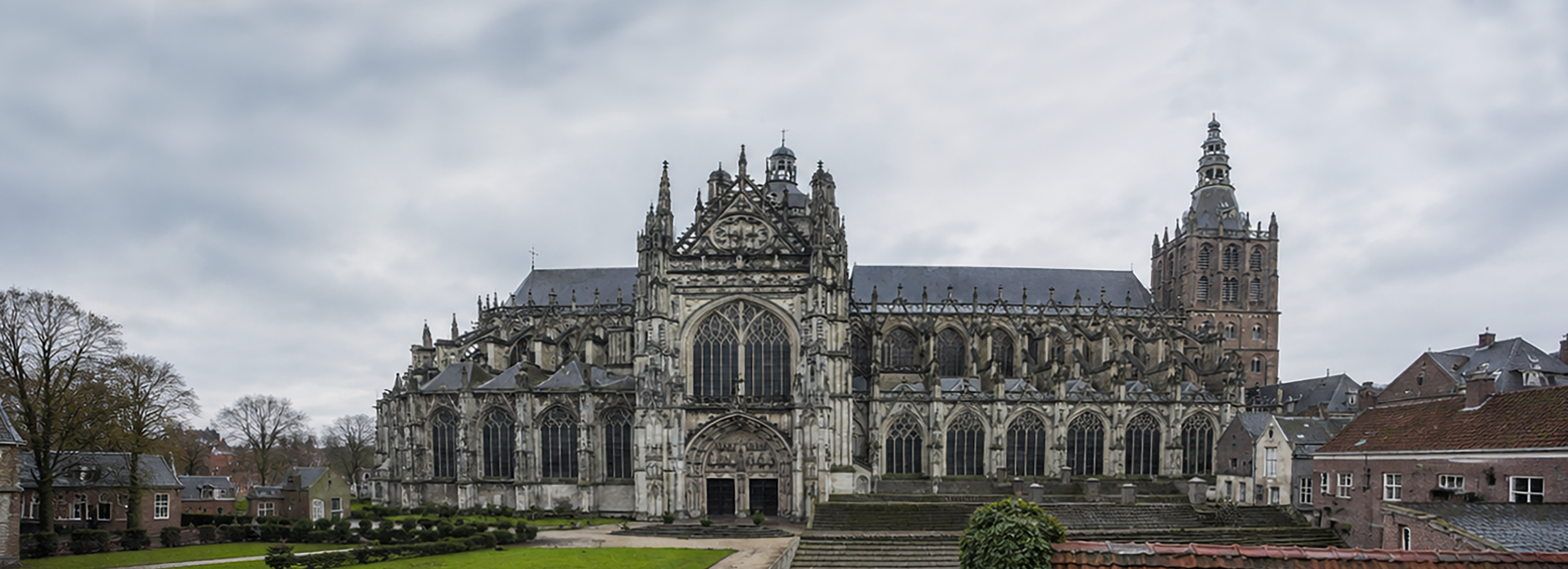
St. John's Cathedral (Sint-Janskathedraal in Dutch). ’s-Hertogenbosch
What Is Hidden Prado?
There are already countless places on the internet designed to simplify art. Hidden Prado was created for the opposite reason.
This project exists because certain paintings resist simplification. They demand slowness, historical patience, visual attention, and a willingness to remain inside ambiguity a little longer than modern culture usually permits. Some works of art are not merely “images.” They behave more like psychological climates. One enters them gradually.
Hidden Prado is devoted to that process.
The essays published here explore painting, symbolism, architecture, religion, psychology, historical atmosphere, material technique, and visual memory. Bosch, Goya, Velázquez, Rembrandt, Piranesi, Dürer, Caravaggio, medieval iconography, forgotten rituals, strange objects, impossible animals, damaged walls, pigments, varnish, candle smoke, ceremonial theatre, and silence all belong naturally within the same intellectual territory.
The project is not academic in the narrow institutional sense, though research matters enormously here. Every essay begins with investigation: historical documents, museum archives, restoration reports, biographies, theology, architecture, technical painting analysis, cultural history, and symbolic tradition. Precision matters. Dates matter. Materials matter. A panel of Baltic oak is not the same thing as canvas. A pigment transported from Afghanistan changes the economics of a painting. A religious confraternity changes the psychological environment of an artist.
At the same time, history is often incomplete.
Painters leave gaps behind them. Rooms disappear. Letters are lost. Conversations vanish permanently. Entire emotional worlds survive only through fragments. In those spaces, interpretation becomes necessary.
Hidden Prado therefore operates partly as historical investigation and partly as intellectual reconstruction.
Where evidence exists, it should be respected carefully. Where certainty disappears, I sometimes make rational and historically plausible suppositions — not fantasies, but informed imaginative reconstructions similar to those used by serious historical novelists. When that occurs, it is signalled openly. The distinction between documented fact, scholarly interpretation, and speculative reconstruction matters deeply here.
Art history becomes sterile when it fears intelligent imagination entirely.
But imagination without discipline becomes noise.
The balance between those two poles interests me.
This is also why the tone of Hidden Prado remains deliberately calm. Modern digital culture rewards speed, outrage, certainty, and endless performance. Great paintings usually operate differently. They unfold slowly. Their meanings shift over time. Their symbols refuse complete obedience. One may look at a Bosch for twenty years and still discover new absurdities hidden inside the landscape. Goya often reveals himself more clearly at night than in daylight. Certain Velázquez paintings appear psychologically unstable the longer one studies them.
That instability is important.
The goal here is not simply to explain artworks, but to observe them seriously enough that they begin revealing their internal logic. Sometimes that logic is theological. Sometimes political. Sometimes material. Sometimes psychological. Often several things at once.
Visually, Hidden Prado will also continue evolving. The project is intended not merely as a collection of essays, but as an aesthetic environment. Images, details, textures, typography, layouts, restoration fragments, architectural references, and carefully selected visual material will gradually become part of the experience. The ambition is not digital excess, but cultivated atmosphere.
There is also another principle behind this project: attention itself has become rare.
To look carefully is now almost a subversive act.
Hidden Prado exists for readers who still believe that paintings deserve time, complexity, silence, and thought.
Juan de Barrientos